Category:Agrifood: Difference between revisions
No edit summary |
|||
| Line 22: | Line 22: | ||
— From “Urban Homesteading: Heirloom Skills for Sustainable Living” by Rachel Kaplan with K. Ruby Blume, Skyhorse Publishing, New York: 2011 [http://www.processedworld.com/carlsson/nowtopian/book-reviews/thinking-about-growing-food] | — From “Urban Homesteading: Heirloom Skills for Sustainable Living” by Rachel Kaplan with K. Ruby Blume, Skyhorse Publishing, New York: 2011 [http://www.processedworld.com/carlsson/nowtopian/book-reviews/thinking-about-growing-food] | ||
==The Insufficient Politics of the [[Slow Food]] and [[Locavore]] Movements== | |||
The Slow Food and locavore movements have been rightly criticized for their class politics, for advancing a laudable goal that is unattainable by many who might choose it if they could, and for consumption excesses that they justify as being local and “slow.” Their essential message, however, that food is an intimate reflection of our lives and culture, is not a class-based assertion but a human one. The appropriate class critique lies in the fact that not everyone can afford a Slow Food meal or the labyrinthine lifestyle of the locavore, but the drive towards localizing our food sources and reimagining our relationship with food can be shared with everyone. Generating local food sources in order to provide food security for everyone is part of the bigger story of the urban food revival currently underway. | |||
— From “Urban Homesteading: Heirloom Skills for Sustainable Living” by Rachel Kaplan with K. Ruby Blume, Skyhorse Publishing, New York: 2011 [http://www.processedworld.com/carlsson/nowtopian/book-reviews/thinking-about-growing-food] | |||
=Resources= | =Resources= | ||
Revision as of 08:08, 31 August 2011
This new section will cover p2p-oriented and relocalization trends in agriculture and food production.
We are in the process of porting the related articles from our Ecology section. First column done so far.
For a closer watch of these developments, see our delicious tags:
Introduction
- Grain proposes: Five key steps towards a food system that can address climate change and the food crisis
- Essential Food Policy Proposals. By MARK BITTMAN
Citations
…everything old is new again. The resurgent interest in local foods and home-scale preservation—from canning, jamming, freezing, brewing, fermenting, and otherwise experimenting with food—is happening coast to coast. Taking up the pot and the pan, the cheesecloth and strainer, the canning jar and the wine bottle, homesteaders are beginning to reweave the web of culture lost in the toxic downdrift of the industrial food supply. Food preservation is hooked into all the values of homesteading—self-sufficiency, community resilience, DIY for fun and pleasure—a reminder that food is not something that’s done for us, but something that we do with one another. Remaking our relationship to food is one of the central homesteading pleasures and practices, a radical act that can go a long way toward growing into our role as producers rather than consumers.
— From “Urban Homesteading: Heirloom Skills for Sustainable Living” by Rachel Kaplan with K. Ruby Blume, Skyhorse Publishing, New York: 2011 [1]
The Insufficient Politics of the Slow Food and Locavore Movements
The Slow Food and locavore movements have been rightly criticized for their class politics, for advancing a laudable goal that is unattainable by many who might choose it if they could, and for consumption excesses that they justify as being local and “slow.” Their essential message, however, that food is an intimate reflection of our lives and culture, is not a class-based assertion but a human one. The appropriate class critique lies in the fact that not everyone can afford a Slow Food meal or the labyrinthine lifestyle of the locavore, but the drive towards localizing our food sources and reimagining our relationship with food can be shared with everyone. Generating local food sources in order to provide food security for everyone is part of the bigger story of the urban food revival currently underway.
— From “Urban Homesteading: Heirloom Skills for Sustainable Living” by Rachel Kaplan with K. Ruby Blume, Skyhorse Publishing, New York: 2011 [2]
Resources
Key Articles and Essays
- Robert Paterson on the Emergence of Four Major Techno-Economic Paradigms: on the key role of food surplus as lever in the evolution of human civilisation [3]
- Jan Douwe van de Ploeg: Reconstitution of the Peasantry in the 21st Century
- Report: Agroecology and the Right to Food : A move by farmers in developing countries to ecological agriculture, away from chemical fertilisers and pesticides, could double food production within a decade [4]
- Report: Sustainable Agriculture and Off-Grid Renewable Energy. Dr. Mae-Wan Ho. ISIS contribution to UNCTAD Trade and Environment Review 2011 [5]
- Jason F. Mclennan. The Urban Agriculture Revolution. Bringing Food into Living Cities. [6]: An important and sensible overview of why this is happening.
Policy proposals:
- Six Proposed Policy Principles for Scaling Up Agroecology. By Olivier De Schutter, Gaëtan Vanloqueren:
How-to:
- Five innovations for urban gardening
- Ensuring Land Access, by Rob Hopskins.
Key Blogs
- Permatechie: a blog about the intersection of ecovillages and hackspaces, ecology and technology, primitivism and transhumanism, permaculture and appropriate technology.
Key Books
- The Ecological Revolution – Making Peace with the Planet. John Bellamy Foster, Monthly Review Press, New York, 2009, 288 pp [7]
- Food rebellions! Crisis and the Hunger for Justice. Eric Holt-Giménez and Raj Patel, Pambazuka Press, Cape Town, Dakar, Nairobi and Oxford, 2009 [8]
- Terra Madre: Forging a New Global Network of Sustainable Food Communities. Carlo Petrini. Chelsea Green Publishing, 2010. [9]
- Reclaiming Public Water. Achievements, Struggles and Visions from Around the World. By Brid Brennan, et al. download: The groundbreaking book on how reformed public water services can achieve the goal of delivering water for all.
- Radical Gardening. George McKay. France Lincoln, 2010
- Robert Albritton, Let Them Eat Junk: How Capitalism Creates Hunger and Obesity, New York: Pluto, 2009. The world food crisis involves global patterns of malnutrition -- 25% of the world is obese or overweight; 25% is starving.
Policy guide:
- The Future Control of Food. A Guide to International Negotiations and Rules on Intellectual Property, Biodiversity and Food Security. Edited By Geoff Tansey and Tasmin Rajotte. IDRC, 2010 [10] : “This book is the first wide-ranging guide to the key issues of intellectual property and ownership, genetics, biodiversity and food security."
Key Movements
Key Policy Documents
- Measures for Relocalization and Reruralization, 2 times four essential policy principles, as proposed by Mariarosa Dalla Costa
- Report: “Our Water Commons, Towards a New Freshwater Narrative” by Maude Barlow [11]
- Report: Who Owns Nature? Corporate Power and the Final Frontier in the Commodification of Life. ETC Group, 2008. [12]. Implications of commodifying Synthetic Biology
- Policy propositions for sustaining food & farming systems, for Victoria, Australia
- Grain: Five key steps towards a food system that can address climate change and the food crisis
Key Webcasts
- Dirt!: excellent documentary
Pages in category "Agrifood"
The following 200 pages are in this category, out of 1,409 total.
(previous page) (next page)A
- Accelerating Transformations to Sustainable Food Systems
- Access to Land
- Access To Land for Community-Connected Farming
- Acequias
- Acorn Community Farm
- Acqua Beni Comuni Napoli
- ADABio Autoconstruction
- Advantages of Open Data for Agriculture and Nutrition
- Against the Grain
- Aggregated Urban Micro-Farms
- Aggregation Economies for the Forest Commons
- AgINFRA
- Agrarian Class Structures and the Origins of Capitalism
- Agrarian Commons Model
- Agrarian Trust
- Agri POD
- Agricultural Land Trust
- Agriculturalism in China
- Agriculture
- Agriculture 4.0
- Agriculture and Food Self-Certification Systems
- Agriculture Commons
- Agriculture in Urban Planning
- Agriculture Supported Communities
- Agrihood
- AgriLedger
- AgriTrue
- Agro Biogenics
- Agro-Ecological Approaches to Agricultural Development
- Agro-Ecology
- Agroecology
- Agroecology and the Commons
- Agroecology and the Right to Food
- Agrovoltaics
- AgStack Foundation
- AgUnity App
- Aixada Sistema de gestión de cooperativas de consumo/es
- Aker
- Alan Savory's Holistic Management of Grasslands
- Alanna Hartzok on Why the Earth Belongs to Everyone
- Alex Corren on ReCommon and Regenerative Community Land Trusts
- Algorithmic Food Justice
- Allan Savory’s Holistic Management and Holistic Planned Grazing
- Allied Community Cooperative
- Allotments
- Alternative Food Geographies
- Alternatives to the Land Value Tax
- Ample Harvest
- Ana Miranda
- Analysis of Social Inclusion in Short Chain Initiatives in Ghent
- Analysis of the Agricultural Cooperative Movement in Greece
- Andrei Platonov
- Andres Duany on Agricultural Urbanism
- Andrianna Natsoulas
- Andy Goldring on Time in Permaculture Economies
- Angélica Schenerock
- Anil Gupta on Appropriate Technology for Agroinnovations
- Anil Naidoo
- Anima Mundi
- Ann Ryan on Commoning Through Community Supported Farming in Ireland
- ANOSI Volos Volunteers
- Applewood Permaculture Institute
- Appropriation of Public Land in Neoliberal Britain
- Aquapioneers
- Aquaponic Integrated Food Energy and Water System
- Aquifer Trust
- ARC2020 Roadmap for Commons-Oriented European Agricultural Policy
- Association for AgriCulture and Ecology
- Atelier Paysan
- Atelier Paysan Plans and Tutorials
- Augmented Forests
- Auzolan/es
B
- Barbara van Dyck on the Political Agroecology of Agri-Food Knowledges in Belgium
- Barcelona Rooftops
- Basherri/es
- Bees Coop
- Bem Dobson on Regenerative Agriculture as a Solution to Climate Change
- Berliner Gartenkarte
- Best Books on Low-Impact Local Food Systems
- Better Land-Based Economies
- Bibliography on Land Commons for European Food Production
- Big Barn
- Big Barn - Map
- Bike Kitchen Bratislava
- Bill Gammage on how the Aboriginals Crafted their Landscape
- Bio-Soil-Cooperative
- Biochar
- Biocultural Community Protocol
- Bioculture
- BiokG's Organic Aymaks - Kyrgyzstan
- BioLinux
- Biological Open Source and the Recovery of Seed Sovereignty
- Biopiracy
- Bioregional Foodshed
- Birth of the Gods and the Origins of Agriculture
- Bisse de Saviesse Glacier Irrigation Commons
- Blair Evans on Developments in Urban Agriculture
- Blockchain Applications for Agrifood
- Blockchain Technology for Land Registries
- Blue Commons
- Boundary Brewing
- Boxomatic
- Brahm Ahmadi
- Bread Bond
- Bren Smith on Ecologically Restorative Open Source 3D Vertical Ocean Farming
- Bren Smith on Restorative Ocean Farming
- Brewster Kahle and Matt Senate on the Revival of the Green Range Progressive Farming Tradition
- Brewster Kneen
- Brian Tokar
- Bright Farms
- Bristol's Food Policy and Urban Agriculture Movement
- Brock Dolman and Olivia Rathbone on the Sowing Circle at the Occidental Arts and Ecology Center North of San Francisco
- Brown Revolution
- Bucky Box
- Building a Rural Wireless Mesh Network
- Buinho Rural Makers
- Bukittinggi Paradigm on Agrarian Reform and Revolution
- Buurt Buik
C
- Cafédirect Producers’ Foundation
- California's Homemade Food Sales Bill
- Calum MacLeod
- Camp Di Grano
- Carbon Farming
- Carbon Sequestration Through Regenerative Agriculture
- Casa da Videira
- Casa Netural
- Case For an Ecological Food System
- Casserole
- Casserole Club
- Center for an Agricultural Economy
- Center for Pattern Literacy
- Center for Sustainable Farming
- Centro Cultural Mariamulata/es
- Challenge Corporate Control of Water
- Charter of the Forest
- CheapStat
- China's Proudhonian Land Ownership System
- Chris Smaje on the Politics of Land
- Christin Chemnitz
- Circular Farming Dashboard
- Cities and the Circular Economy for Food
- Cities Farming for the Future
- City of Vancouver’s Food Strategy
- City-Based Food Commons
- City-Rural Connections
- Civic Agriculture
- Civic Fruit
- Civil Society in Sustainability Transitions of Food Systems
- Civil Society Tactics to Cultivate Commons and Construct Food Sovereignty in the United States
- Clearbon
- ClearKarma
- Climate Change and Land
- Climate Farmers
- Climate Trends and Global Crop Production Since 1980
- CMVMC Communal Land Communities in Galicia
- Co-Creative Gardening
- Co-Gardening Matching Services
- Co-oking
- Co-operative Land Bank
- CoFed
- Colin Tudge on the Campaign for Real Farming and Good Food for Everyone
- Collaboration and Interoperability of Open Food Projects and Systems
- Collaborative Blockchain-Based Data Systems in the Food Supply Chain
- Collaborative Cooking
- Collaborative Eating
- Collecting Rainwater Illegal in Many U.S. States
- Collective Food Buying Groups
- Colne U Copia West Yorkshire Local Food System
- Comet-Farm
- Coming to Ground
- Common Asset Trusts for Ocean Commons
- Common Earth
- Common Genomes
- Common Good Food
- Common Ground Trust
- Common Land
- Common Land - UK
- Common Land Ideology in US History
- Common Lands Network
- Common Pasture Land in Europe
- Common Soil
- Commoners and Common Right in English History
- Commonland
- Commonland Four Returns Framework
- Commonly Owned Land of Barbuda
- Commons as New Narrative to Enrich the Food Sovereignty and Right to Food Claims
- Commons Connection Between Land, Food, and Money
- Commons Credit
- Commons Development Officers Network - Wales
- Commons for Agricultural Innovation
- Commons For Cocoa
- Commons in Galicia
- Commons of Soil
- Commons-Based International Food Treaty
- Commons-Based Land Stewardship
- Commons-Based Peer-Production Network To Facilitate the Sharing of Plant Genetic Information and Biotechnological Tools
- Commons-Based Property Regimes in German Farming Systems
- Commons-Managed Aquifer Recharge System - Sierra Nevada, Spain
- Commons: the model of “post” liberal capitalism
Media in category "Agrifood"
This category contains only the following file.
-
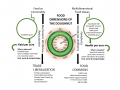 Food-doughnut.png 1,124 × 840; 307 KB

![[3]](http://pan.tilted.net/~admin168/wp-content/uploads/2010/03/newParadigm_graph2flat2.jpg)