Category:Technology: Difference between revisions
No edit summary |
GoodRollin (talk | contribs) No edit summary |
||
| Line 199: | Line 199: | ||
'''Wiki software''', http://en.wikipedia.org/wiki/Wiki_software | '''Wiki software''', http://en.wikipedia.org/wiki/Wiki_software | ||
[[Category:P2P Domains]] | |||
Revision as of 20:28, 2 August 2010
This is a place to monitor technological developments, the P2P infrastructure, software issues, technology-enabled cooperation, etc.. Eventually, this section should exhibit the answer to the following question: what are the technical requirements for human emancipation? How to we design and implement an infrastructure that guarantees the participation of all?
Our related Standards section monitors open standards, interoperability, etc...
Above all, never forget: Technology Is Not a Force for Either Liberation or Oppression, as explained by Dale Carrico.
Projects we find worthty of support:
- Open Source Mesh Networking projects monitored by Open Source Mesh
- P2P and the Social Cloud. Rafael Pezzi: Part 1 and Part 2: programmatic statement on a truly open and non-proprietary internet infrastructure
- Various strategies to achieve Free Fiber to the home
- High Priority Free Software Projects: "The FSF high-priority projects list serves to foster the development of projects that are important for increasing the adoption and use of free software and free software operating systems."
- Most congruent with our value system is the technical team at Organic Design in New Zealand.
- If your Internet is filtered and you cannot access to given websites, you may find these tools at Sesawe useful.
Typology
This typology by David Weinberger [1] is actually quite useful in determining basic attitudes towards the internet and technology:
"1. Exceptionalist (E) vs. Ordinarist (O). Exceptionalists believe that the Internet is exceptional, extraordinary, and disruptive, the way, say, the printing press was. Ordinarists believe that the Internet is just another new medium, no more revolutionary than, say, CB radio.
2. Technodeterminist (T) vs. Contextualist (C). Technodeterminists believe that the Net by itself brings about transformations against which it is futile to struggle. Contextualists believe that technology by itself does nothing and changes nothing; other factos determine the effects of technology.
3. Optimist (H) vs. Pessimist (P). Optimists believe that the Net is, or brings about, good things. Pessimists believe otherwise. (Note: Since everyone believes their beliefs are true, everyone thinks they are a realist. When someone actively asserts s/he is a realist, s/he is actually asserting a form of counter-optimism, i.e., pessimism.) (Note: The “H” stands for Happiness or Hope."
Short Citations
All P2P really means is person-to-person: normal folk using web tools - without the annoyance of an institution or mega-corp getting in the way.
- James Cherkoff [2]
"The most profound technologies are those that disappear. They weave themselves into the fabric of everyday life until they are indistinguishable from it"
- Weiser [3]
“Man is a Tool-using Animal. . . . Nowhere do you find him without Tools; without Tools he is nothing, with Tools he is all.”
One of the key elements of p2p is the end of the distinction between infrastructure and users. Under p2p the users BECOME the infrastructure.
- Paul Hartzog
Long Citations
A truly technological machine is an open one, and the ensemble of open machines presupposes man as permanent organiser, as living interpreter of machines both in themselves and in relation to other machines. Far from being overseer of a gang of slaves, man is the permanent organiser of a society of technical objects which need him as musicians need a conductor... So man's function is to become both coordinator and permanent inventor of the machines around him.
- Simondon, Du mode d'existence des objets techniques (1958) [4]
“I choose to see personal web‐server technology (Opera Unite, Firefox POW, etc) as a breakthrough technology, so people can put their own data into the cloud without paying Flickr or whomever. It is this sort of 'personal technology' I believe will characterize (what we now call) Web 3.0 (and not 3D, or semantic web, etc.). So my dilemma is that, while these technologies are pretty evident today, it is not clear that the people I suspect Pew counts as “the savviest innovators” are looking at them. So I pick “out of the blue” even though (I think) I can see them coming from a mile away.”
– Stephen Downes, National Research Council, Canada [5]
Key Resources
- For the most fully distributed Peer to Peer Computer Networks at present, please check out Tribler ;Peerple ; Wipeer
- Research into more fully distributed P2P systems for the future: Chord, CX Project, Farsite, Globe Project, Oceanstore, Pastry
- Peer to Peer Virtual Worlds: VastPark, Solipsis, Vast; see also: Multiverse
- Decentralized P2P software programs are monitored and indexed here; Flud maintains a list of Distributed Internet-based Backup Systemssuch as Tahoe
- Complete list of P2P Filesharing programs with comparative notes. + A list of free and open source filesharing systems
- Lucas Plan Requirements for Human Technology
- Tech resources for nonprofits: Social Source Commons, on what softwares nonprofits use; Aspiration Tech - social software 'clearing house'; Tactical Tech - social information design and technology coaching; SF Nonprofit Technology Center - collab office n meeting space for nonprofits and social tech consultants
- Find Open Source Alternatives to commercial software in the OSALT directory
- Virtual Private Network sites are ideal to circumvent internet censorship: HotSpot Shield , AlwaysVPN (also for Linux) and Social VPN: Run the installer and they just work with one click every time you get to a blocked website.
- Anonymizer Sites & Services: "there are two general types: networked and single-point. There is one known networked anonymizer called EFF Tor, highly recommended"
- Free proxy lists
- List of Distributed Search Engines; [6]
- Government and Open Source Software + the 2007 Government Open Source Policies from the Center for Strategic and International Studies, listing the Open Source policies of hundreds of national, state/province/territory and local governments
- Free Software PDF Readers
- EPIC Online Guide to Practical Privacy , at http://epic.org/privacy/tools.html
Also:
- The Organizer's Tool Crib is a participatory directory of online tools and resources for social change activists.
- Directory of Open Source Alternatives to commercial software (also here.
- Here is a provisional list of courses related to social technology, which are being updated through this link in Delicious
- Top 100 Open Source Linux Applications
- Free Public Proxy Servers Lists
- Infrastructure for social movements at Rise Up
- Free groupware: links to collaborative software which can be freely used, copied, studied, modified, and redistributed
- CircleID is a good source to monitor internet infrastructure developments
- Tactical Tech helps activist organizations with training, support and tools such as NGO in a Box
- Open Source Living: guide to the best freely available open source software on the web
- The Big List of Social Sites includes a directory of social networking sites, social bookmarking sites, and social aggregation sitges.
- List of collaborative software and ofwiki software compiled by Mark Elliot
- List of Wireless Community Networks Worldwide
Articles
- The evolution towards the Giant Social Graph as the next stage of the Web and Web 3.0, bringing together, 1) The Semantic Web, 2) The Social Graph; 3) Social Network Sites; 4) Portable_Social_Networks
- The Internet Hierarchy of Needs by Vortex DNA
- From the Document Web, via the Data Web, to the Active Web by John Geldart.
- The Evolution of the Web: illuminating 10-parter by Yhong Ding.
- Web 3.0 and the future of the desktop: excellent overview by Nova Spivack.
Also:
- Peer-to-Peer Networks as a Distribution and Publishing Model: the best introduction to the advantages of P2P Computing!
- The Rise of the Stupid Network. David Isenberg's classic essay for locating intelligence in the periphery, not the core.
- End-to-End Arguments in System Design: The best way to design a network is to allow the sender and receiver to decide what the data means, without asking the intervening network to interpret the data.
- World of Ends: Doc Searls and David Weinberger summarize the key characteristics of the internet.
- Telecommunication expert Gordon Cook asks: Is Bandwidth Infinite?
- Overview of the Economic impact of free software
- The Voice 2.0 Manifesto on the future of telecommunications. By Alec Saunders.
How-To
- Top Ten methods to access banned websites + Everyone's guide to circumvent internet censorship
- What's the difference between Internet TV and IP-TV?
- Understanding Free Software, Open Source Software and Floss, thanks to this booklet
- How to buy a pre-loaded Linux Computer
- Tapping into the Matrix: Two-part series on harnessing the idle processing power of distributed machines, by Carlos Justiniano. Part 2
- How Anonymizers Work
- How To Communicate Securely in Repressive Environments. Patrick Meier: Core to effective strategic nonviolent action is the need to remain proactive and on the offensive; the rationale being that both the resistance movement and repressive regime have an equal amount of time allocated when the show-down begins. If the movement becomes idle at any point, this may give the regime the opportunity to regain the upper hand, or vice versa.
Getting Help:
- Appropriate Software Foundation: facilities and tools to develop Free Software supports for civil society processes.
- Risup Labs: free software for the public good
- Organizers' Collaborative: a Boston-based organization established in 1999 to promote better use of technology by social change organizations throughout the US. The Organizers' Collaborative is dedicated to advancing social change through the effective use of technology. We are particularly committed to low-cost and no-cost tools created in the spirit of Open Source.
Podcasts on P2P Technology
- Adam Greenfield on Ubiquitous Computing
- Bruce Sterling on the Internet of Things
- Conversation with Ward Cunningham
Webcasts on P2P Technology
Full list at: P2P Videos on Internet Technology
Wikipedia Articles
Collaborative Filtering, http://en.wikipedia.org/wiki/Collaborative_filtering
Collaborative software, http://en.wikipedia.org/wiki/Collaborative_software
Computer-supported collaboration, http://en.wikipedia.org/wiki/Computer-supported_collaboration
Computer-supported cooperative work, http://en.wikipedia.org/wiki/Computer_supported_cooperative_work
Debian Free Software Guidelines, http://en.wikipedia.org/wiki/Debian_Free_Software_Guidelines
Filesharing, http://en.wikipedia.org/wiki/Filesharing
GNU, http://en.wikipedia.org/wiki/GNU
GNU General Public License, http://en.wikipedia.org/wiki/GNU_General_Public_License
Grid Computing, http://en.wikipedia.org/wiki/Grid_computing
FLOSS, http://en.wikipedia.org/wiki/FLOSS
FOSS, http://en.wikipedia.org/wiki/FOSS
Free Content, http://en.wikipedia.org/wiki/Free_content
Free software, http://en.wikipedia.org/wiki/Free_software
Open Source, http://en.wikipedia.org/wiki/Open_source
Open Source Initiative, http://en.wikipedia.org/wiki/Open_Source_Initiative
Open Source Definition, http://en.wikipedia.org/wiki/Open_Source_Definition
Open Source software, http://en.wikipedia.org/wiki/Open_source_software
Open Source Software, http://en.wikipedia.org/wiki/Open_Source_Software
Peer to Peer (technology), http://en.wikipedia.org/wiki/Peer_to_peer
Point to Point (technology), http://en.wikipedia.org/wiki/Point-to-Point
Public Domain, http://en.wikipedia.org/wiki/Public_domain
Recommendation system, http://en.wikipedia.org/wiki/Recommendation_system
Reputation, http://en.wikipedia.org/wiki/Reputation
Social software, http://en.wikipedia.org/wiki/Social_software
Wiki, http://en.wikipedia.org/wiki/Wiki
Wiki software, http://en.wikipedia.org/wiki/Wiki_software
Subcategories
This category has the following 2 subcategories, out of 2 total.
C
P
Pages in category "Technology"
The following 200 pages are in this category, out of 2,015 total.
(previous page) (next page)A
- Aaron Bastani on Fully Automated Luxury Communism
- Aaron Swartz on Peer To Peer, Digital Rights Management and Web 2.0
- Aaron Swartz on the Shift from Centralized Systems to Networks
- Access Commons
- Access Controlled
- Active Web
- ActiveCollab
- Activity Standards
- Activity Stream
- Actor System Model of Computation
- Ad Hoc Mobile Networks
- Ad Hoc Routing Protocols
- Ad Hoc Temporary Social Networks
- Ad-free Live Video Broadcasting
- Adam Greenfield on Everyware
- Adam Greenfield on Ubiquitous Computing
- Adaptive Architecture, Collaborative Design, and the Evolution of Community
- Advanced Automation
- Adversarial Interoperability
- Affordance
- African Social Technology Blogs
- Afrimesh
- After the Internet
- Agent-Centric Computing
- Agile Approach
- Agile Software Development
- AI and Warfare
- AI Commons
- AI Ethics Guidelines Global Inventory
- AI Index
- AI Propaganda
- AI Sharecroppers
- AI Windfall Clause
- AI-Enabled Localization
- AI-Powered Trading
- Aiki Framework
- Ajax
- Akshaya
- Al Cano Santana on Guifi's Autonomous Internet Infrastructure in Catalonia
- Alan Cox on the State of Free Software in 2007
- Alanna Irving on Tools for Radical Financial Collaboration
- Alexander Bard on Syntheism and the Syntheist Movement
- Alexander Bard on Technology Gods
- Alfredo Lopez on Progressive Providers
- Alfredo Lopez on Radical Techies
- Alg-a Lab/es
- Algo-Robotic Systems
- Algorithm Watch
- Algorithmic Language - Cuba
- Algorithms
- Algorithms as Regulatory Objects
- All Tech Is Human
- Alliance for Wild Ethics
- Allocation Economy
- Alternative Network Deployments
- Amara's Law
- Ambient Commons
- Ambient Intelligence
- Andrew Feenberg
- Andrew Whelan on P2P's Impact on the Music Industry
- Android
- Android Open Accessory
- Android Open Source Project
- Andy Oram on Free and Open Cloud Computing
- Andy Oram on the FLOSS Manuals Project
- Anne Kjær Riecher on the ReDI School of Digital Integration in Berlin
- Annotation Tools
- Anon Plus
- Anon+
- Anonymity
- Anonymity Tools
- Anonymous Blogging
- Anonymous Blogging with WordPress and Tor
- Anonymous P2P
- Anthrobscene
- Anthropology of Technology
- Anti-Racist Technoscience
- Antoine Fressancourt on Implementation Challenges for P2P Systems in Mobile Network Environments
- Apache - Governance
- API
- Appelbaum, Assange and Harrison on a Global Guild for Sysadmins
- Appgree
- Application Content Infrastructure
- Applied Sustainability
- Appropriate Technology Villages
- Aprendices/es
- Aram Sinnreich on MondoNet as a Truly Independent Internet
- Aram Sinnreich on the Next Generation Independent Internet
- Architecture of Open Source Applications
- Around Me
- Artificial Capable Intelligence
- Artificial Intelligence
- Artificial Intelligence and Equality Initiative
- Artificial Superintelligence Alliance
- Assessing Technologies for Degrowth
- Asterisk
- Asterix
- ASUS Eee PC
- Asymmetric Link
- Asymmetrical Internet Access
- Asynchronous Inter-Device Communication Protocol
- Audio Compression
- Audio Software
- Audio-Screen Capturing
- Audio-Video Editing
- Audio-Video Players
- Audio-Video Tagging
- Augmented Reality
- Authoritarian and Democratic Technics
- Automatic Character Switch
- Automating Environmental Interventions
- Automenta
- Autonet
- Autonomous
- Autonomous Systems - Internet
- Autonomous Tech Collectives
- Autonomous vs Systemic Innovation
- Axemaker's Gift
- Axiological Design
B
- Backchannel
- Badges
- Bandit
- Barbara van Schewick on Internet Architecture and Innovation
- Barcelona Initiative for Technological Sovereignty
- BATMAN
- Being and Technology
- Ben Cerveny on Pervasive Computing
- Ben Goertzel
- Ben Peters on Why the Soviet Internet Failed
- Beneficial General Intelligence
- Benefits of the Second Industrial Revolution vs the Benefits of the Third Industrial Revolution
- Berkeley Open Infrastructure for Network Computing
- Better Without AI
- Beyond TCP/IP
- Beyond the Technological Revolution
- Bibliography on the Enclosure of Science and Technology
- Big Data
- Big Switch
- Bill St Arnaud
- Bitchun Society Whuffie Tracker
- Bitcoin and the Blockchain Are Firmly Anchored in Anarcho-Capitalist Visions of a Hyper-Capitalist Society
- Bitmessage
- BitPools
- BitTorrent Live
- Blake Ross
- Blender
- Blobject
- Block Bot
- Blockchain
- Blockchain and Its Problems With Externalities
- Blockchain Application Stack
- Blockchain as Ultracapitalist Enclosure
- Blockchain Interoperability Alliance
- Blockchain Network
- Blockchain Technology, Trust and Confidence
- Blockchain, Whitechain, Blackchain and Graychain
- Blog Comment Systems
- Blogging Practices of Knowledge Workers
- Blogging Standards
- Bob Young
- Boids
- Bot Club
- Bots and Automation over Twitter during the U.S. Election
- Bottom-up Broadband
- Bottom-up Broadband for Europe
- Bottom-Up Broadband Project
- Bradley Kuhn
- Bram Cohen
- Bram Cohen on the Creation of BitTorrent
- Brave New Software
- Breaking the Frame
- Brendan Miller
- Brian Behlendorf on Apache and the Apache Foundation
- Brian Chau on the Political Ideology Embedded in ChatGPT and OpenAI Learning Models
- Brief History of the GNU Social Fediverse and Federated Microblogging
- Broadband
- Broadband Policy
- Browser Wars Retrospective
- Bruce Sterling on the Internet of Things and Spimes
- BSD
- BuenosAiresLibre/es
- Building a Solid World
- Building a Web of Needs
- Building Web Reputation Systems
- Butter’s Law of Photonics
- Buy This Satellite
Media in category "Technology"
The following 4 files are in this category, out of 4 total.
-
 Figure1.png 433 × 263; 116 KB
-
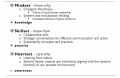 Figure2.jpg 962 × 625; 118 KB
-
 Table1.png 433 × 210; 62 KB
-
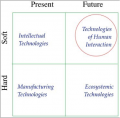 Table3.png 454 × 447; 129 KB


