Category:IP: Difference between revisions
| Line 176: | Line 176: | ||
#The [[Negative Effects of the Patent System]] | #The [[Negative Effects of the Patent System]] | ||
#[http://www.embeddedtechjournal.com/articles_2008/20080729_patent.htm 10 Arguments against Patents]: really good summary on the anti-innovation effects on patents | |||
=Key Resources= | =Key Resources= | ||
Revision as of 06:12, 4 April 2009
The spectre that is haunting Intellectual Proprietors world-wide is no longer just the much-lamented "death of the author", but the becoming-producer and becoming-distributor of the capitalist consumer. [1]
We support reform of Copyright legislation:
- Lawrence Lessig: Five Proposals for Copyright Reform
- More radical: Seven Solutions In Favour of a Free Culture of Citizens Who Share
- Michael Carroll: The necessity of an actively ‘tagged’ digital public domain
Introductory Statement
This page started originally as the resource page for what is generally called "Intellectual Property", which encompasses the very different regimes of Copyright, Patents, and Trademarks. (Cory Doctorow explains Why We shouldn't use the concept of Intellectual Property).
It is also where we keep track of what we call Peer Property, the new forms of 'Common' (rather than private, or collective-public) property, that either allow for sharing of creative expression, such as the Creative Commons type of licenses, or that protect common projects from private appropriation, such as the General Public License type of licences.
However, we will extend the coverage of this section to ownership of physical objects as well, though the framework for rival physical goods is of course very different from that of non-rival or anti-rival immaterial goods. We cover peer to peer based forms of physical production more particularly at http://p2pfoundation.net/Category:Design
For immaterial goods, we expect that non-reciprocal Peer Production will expand without too much difficult, and this calls for a regime for the free distribution of cultural and intellectual production.
For physical goods, which are 'rival' and carry more substantial costs, regimes of reciprocity and exchange are more appropriate, since it involves the allocation of scarce goods. Here, there is room for peer-informed modes of production and ownership , rather than pure peer production.
Following the advice of Richard Stallman, we will attempt not to use the concept of Intellectual Property. Stallman is opposed to using an abstract concept for what are three distinct areas of copyright, patent, and trademark law.
Most of what is called "intellectual property" is not only objectionable on the pragmatic grounds that it hinders innovation, but on the more principled ground that it is designed to prohibit freely cooperating communities. Further expansion of peer production and governance is impossible without the prior availability of free and open cultural raw material.
This page is maintained by Michel Bauwens. Thanks to Nicholas Bentley for his early contributions.
Discussion
- A2K discussion]: promoting access to knowledge
Short Citations
- Everybody is connected to everybody else, all data that can be shared will be shared: get used to it. - Eben Moglen
- The basic argument of copyright abolitionists is that people should be free to share when sharing does not result in any diminution of supply. - Karl Fogel [2]
- Computers are machines for copying data. A good computer is one that copies well, quickly and cheaply. The internet is a machine for moving copies of data around. When the internet works well, it copies data quickly and cheaply. - Cory Doctorow [3]
- Fair Use Worth More to Economy Than Copyright: Fair use exceptions to U.S. copyright laws account for more than $4.5 trillion in annual revenue for the United States - CCIA [4]
Long Citations
James Boyle on the need for balance
"The first thing that our policymaker should do is realise that every time you protect somebody’s output, their intellectual work, you extend their trademark, you give them control over some gene sequence, some line of code, you have extensive software patents, you are raising the costs of the inputs to another innovator further upstream. The very first thing you do is look at that balance and say I want to get it right."
- James Boyle [5]
The basic truth about copyright and the public domain
“The purpose of copyright law has been to promote learning and the progress of knowledge. Two features of copyright law should provide the guide for how to respond to access concerns. First, copyright is an author’s right. This is definitional….
Second,…copyright is a time-limited right. Copyright expires so that the public may ultimately gain unlimited access and use rights. This also is definitional….
Therefore, by design, all copyrighted works are destined for the public domain….”
- Michael Carroll [6]
Three types of goods: Collaborative Goods show Anti-rivalry
In the rivalry dimension, we start at private goods that exhibit high rivalry, which means that use by one subtracts from the use by another. We move to public goods, which exhibit low rivalry, where use by one does not subtract from use by the other. For anti-rivalry goods, we hypothesize the opposite effect, use by one adds to the potential for use by another. In the excludability dimension, we start with private goods, where it is easy to keeping people out. We move to public goods, where excludability is difficulty. For inclusive goods, we hypothesize to the opposite effect – the benefit of pulling people in.
- Mark Cooper [7]
Free Must Always Also Mean Gratis!
I do not understand how you can have ‘libre’ freedom without ‘free as in beer’ freedom. While the latter does not necessarily imply the former, the former always implies the latter. If everyone can share X freely with others, than the cost will always be driven down to zero (hence X will have both freedoms); if people cannot so share, then X is, by definition, not “libre” free.
- Karel Fogel [8]
Copyright is an inefficient mechanism to protect creative work
While copyrights do provide an incentive for creative work, they are an extremely inefficient mechanism for this end. It is most efficient when items are sold at their marginal cost. Economists generally get infuriated about the economic distortions that are created when tariffs of 10 percent or 20 percent are placed on items like steel or clothes. In the case of copyrights, material that could otherwise be transferred at zero cost, instead commands prices of $15 for CDs, $30 for movies, and even higher prices for other items, entirely because of the government-granted monopoly. For this reason, the economic distortions created by copyright dwarf the economic damage caused by other forms of trade protection.
- Dean Baker [9]
More Citations
The Meaning of the 21st century intellectual property wars
"Technological progress - from the Printing Press to the BitTorrent protocol - is what essentially drives cultural development and social change, what makes it possible to share ideas, embrace expressions, improve inventions and correct the works of the past. Human history is the history of copying, and the entirely defensive and desperate attempt to stall its advancement by the means of Intellectual Property - the proposition to ressurect the dead as rights holders and turn the living into their licensees - only indicates how profoundly recent advancements in copying technology, the adaptability and scalability they have attained, the ideas and habits they are creating, are about to change the order of things. What lies at the core of the conflict is the emergence of new modes of subjectivation that escape the globally dominant mode of production. The spectre that is haunting Intellectual Proprietors world-wide is no longer just the much-lamented "death of the author", but the becoming-producer and becoming-distributor of the capitalist consumer." [10]
Why DRM is broken:
"DRM is broken:Bits will never get harder to copy: the limits of copyright online. The problem is that until DRM started building legal restrictions on the use of cultural products into the hardware used to access those products, the relationship between technological capabilities, laws, and social changes was flexible enough to allow copyright laws to evolve with the times. When radio came along and enabled the broadcast of music that had previously been accessed through live performance or sheet music, the legal remedy of compulsory licensing enabled rights owners to be compensated and for a new medium for musical performance to grow. DRM, together with the Digital Millennium Copyright Act, which criminalizes circumvention of DRM measures, puts an end to that flexibility by instantiating in technology a social agreement that used to be mediated by courts: "DRM stops the change process" that been evolving since the establishment of copyright laws. "Fair use," fundamental to education, scholarship, and the arts, is broken because the rights holder, not a legal process, determines the boundaries, and "DMCA makes breaking DRM to enable fair use illegal."
- Jennifer Urban and Cory Doctorow [11]
Why drug patents are costing lives:
"Knowledge is like a candle, when one candle lights another it does not diminish its light.' In medicine, patents cost lives. The US patent for turmeric didn't stimulate research, and restricted access by the Indian poor who actually discovered it hundreds of years ago. 'These rights were intended to reduce access to generic medicines and they succeeded.' Billions of people, who live on $2-3 a day, could no longer afford the drugs they needed. Drug companies spend more on advertising and marketing than on research. A few scientists beat the human genome project and patented breast cancer genes; so now the cost of testing women for breast cancer is 'enormous."
- Joseph Stiglitz [12]
How copyright would kill the fashion industry:
"People don't buy new clothes because they need them--they buy them to keep up with the latest style. The fashion industry responds to our desires by churning out new designs at a rapid clip. But fashion designers don't maroon themselves on a desert island to create their work. Designers pay close attention to the work of their peers, and they love to mine the past for ideas. When they see something that they like, they copy it--or, in the argot of the industry, they "reference" it.... The result is the fashion industry's most sacred concept: the trend. Copying makes trends, and trends are what sell fashion.... And the trend-driven copying of attractive designs ensures that those designs diffuse rapidly in the marketplace. This, in turn, makes the early adopters want a new style, because nothing is less attractive than seeing your carefully chosen clothes on the backs of the hoi polloi. In short, copying is the engine that drives the fashion cycle."
- David Levine [13]
Intellectual Property Laws as Sumptuary Laws:
"In the late middle ages, feudalism was being undermined by (among other things) the rise of trade. Merchants, previously beneath notice, began to get rich enough so that they could buy clothes, furniture and houses that were comparable to those of the nobility.
One response of the “establishment” was to institute sumptuary laws, strictly limiting the kinds of clothes, furniture, houses, etc. merchants could own. There was a period where rich merchants found ways to “hack” the laws with very expensive plain black cloth and so forth, and then the outraged nobility would try to extend the laws to prohibit the hack. Of course this attempt to hold back the tide failed.
I think that in the current bizarre and often self-damaging excesses of copyright and patent owners, we’re seeing something very like these sumptuary laws. Once again, the organization of economic activity is changing, and those who’ve benefited from the old regime aren’t happy about that at all. They are frantically throwing up any legal barriers they can to keep out the upstarts. But once again, attempts to hold back the tide will fail."
- Anomalous Presumption blog
Introductory Articles
The essential discussions:
On Peer Property
Kevin Kelly: In a dematerialized economy, sharing is better than owning
Also:
- We recommend checking out our entry on Peer Property, which is a form of the Common and creates a Commons
- It is very important to distinguish the four different degrees of freedom], culminating in Triple-Free Software and peer production. An insight from Tere Vaden.
- The Property Taskforce is a good resource to learn about Property regimes
- The Libre Labyrinth] of Greg London, guides you through the maze of free and non-free licenses
On defining Freedom and Openness
- Free Content Definition
- Open Knowledge Definition
- Definition of Free Cultural Works
- Open Source Definition
On Commons-oriented Software Licenses
- Richard Stallman argues forcefully, that we should not use the muddled concept of IP, and explains Why Software Should Not Have Owners.
- Patrick Anderson explains the difference (and deep similarity) between Ownership of Software vs. Ownership of Goods, and says open property models could be extended once we accept that the user (and not the worker) is the owner of the physical means of production. See also his proposal for User Ownership
- Karl Fogel explains how the General Public License uses Copyright to obtain the opposite effect of guaranteeing sharing: Stallman's Jiujitsu
- The Libre Labyrinth. Navigating the Maze of Free and NonFree Licenses. By Greg London, 2008: describes an objective way to understand how various FLOS licenses work, and how different FLOS licenses compare to one another
- A Comparative Ethical Assessment of Free Software Licensing Schemes. By S.Chopra and S. Dexter: how to choose between Free Software, Open Source Software, or proprietary software, from an ethical point of view
On Copyright
- Stan Rhodes: Three Key Arguments against the continuation of copyright restrictions
- Stephan Kinsella: Against the artificial scarcity induced by IP law From: Against Intellectual Property
- Interview: James Boyle on the Endangered Public Domain
The classics on Information Economics
- JP Barlow, “The Economy of Ideas: A framework for patents and copyrights in the Digital Age”, Wired 2.03 (March 1994), at http://www.wired.com/wired/archive/2.03/economy.ideas_pr.html
- E Dyson , “Intellectual Value”, Wired 3.07 (July 1995), at http://www.wired.com/wired/archive/3.07/dyson_pr.html
- K Kelly, “The Economics of Ideas”, Wired 4.06 (June 1996), at http://www.wired.com/wired/archive/4.06/romer_pr.html
Other articles:
- Let's 1) Question Copyright; 2) Defend the Right to Create; and 3) avoid Monopoly through Intellectual Property
- The Promise of a Post-Copyright World, examines the history of copyright and finds it is meant to protect distributors, not creatrive authors. See also the video presentation by author Karl Fogel. Please note that Copyright is Not a Right! This is an essay from a radical anti-copyright point of view, which rejects the Creative Commons compromise: Copyright, Copyleft and the Creative Anti-Commons
- Martin Springer has a set of Critical Questions regarding IP and participation
- If you are from the South, Robert Verzola's Cyberlords as a rentier class is recommended reading.
- Against Perpetual Copyright. Lawrence Lessig.
- Here is a useful general Guide to Intellectual Property Rights
On Patents
- The Negative Effects of the Patent System
- 10 Arguments against Patents: really good summary on the anti-innovation effects on patents
Key Resources
Recommended Articles, Reports, etc...
- Some_Myths_About_Intellectual_Property: the basic arguments outlined
- The Open Society Institute on User Rights, Copyright and DRM in the EU
- More in our archive of articles on Peer Property and IP developments.
More:
- Non-repudiation services help you protect individual copyrights, i.e. Registered Commons, My Free Copyright, Numly
Recommended Books
- Copyright in Historical Perspective, recommended by Lawrence Lessig as a key history of author's rights.
- Code. Essays on collaborative ownership and innovation. Ed. by Rishab Ayer Gosh.
- Understand Knowledge as a Commons. Great anthology of essays ed. by Charlotte Hess and Eleanora Ostrom, pioneering researchers on the commons.
- James Boyle. The Public Domain: Enclosing the Commons of the Mind. [14]
Recommended Delicious Tags
Intellectual Property [15]; Open Content[16]; FLOSS [17] P2P-Filesharing [18]; Creative Commons [19]; Copyleft [20]; GPL [21]
and other appropriate tags are at http://del.icio.us/mbauwens
P2P Hall of Fame: Copyright Theory Experts
P2P Copyright Theory Hall of Fame: Richard Stallman (General Public License) Lawrence Lessig [22] (Creative Commons and Free Culture movement), James Boyle [23](IP developments), Nicholas Bentley (Intellectual Contributions Theory), Ben Moglen (Free Software Foundation legal counsel), Peter Suber [24](Open Access, Jessica Litman (Digital Copyright); David Bollier [25][26](Commons); Cory Doctorow (anti-DRM activism); Stephen Dowes [27] (e-learning and learning objects)
- Peter Drahos [28] (author of books The Philosophy of Intellectual Property and Information Feudalism)
Encyclopedia
Pages in category "IP"
The following 200 pages are in this category, out of 1,057 total.
(previous page) (next page)A
- A2K Access to Knowledge
- A2K Movement
- Abuse of Open Licenses
- Access Principle
- Access to Knowledge
- Access To Knowledge
- Access to Knowledge in a Network Society
- Access to Knowledge in the Age of Intellectual Property
- Access to Knowledge Movement
- Access to Medicines
- Accès aux Savoirs
- ACTA
- Action Plan for Copyright Reform and Culture in the XXIst Century
- Advocacy Organizations for Open Access
- African Copyright and Access to Knowledge Project
- Against Intellectual Monopoly
- Against Intellectual Property
- Alan Bennett and Keith Bergelt on Patent Pools
- Alliance for Taxpayers Access
- Alma Swan on Open Access e-Books and Open Research
- Alternative Approaches for Protecting Indigenous Traditional Knowledge
- Alternative Freedom
- Alternative Incentives for Health and Pharma
- Alternative Media Cooperative
- Amateur to Amateur
- Analysis of Open Hardware Licensing
- Anarchist in the Library
- Andrew Tridgell on Patent Defence
- Anne Barron
- Anne-Catherine Lorrain
- Anthony McCann on the Enclosure of the Information Commons
- Anti-Counterfeiting Trade Agreement
- Anti-DCMA
- Anticommons in Biomedical Research
- Anticommons Property
- Apple’s App Store as a Closed Development Platform
- Appropriate Commercial Custodianship of IP by Third Parties in Free Culture Age
- Aram Sinnreich
- Aram Sinnreich on the Piracy Crusade
- Are Netlabels Long Tail Niches or the Blueprint for the Future
- Are Patents Good for Climate Change
- Arti Rai on the Role of Law in Open Source Biology
- Artistic Freedom Voucher
- Artistic Freedom Vouchers
- Attribution
- Author Addenda
- Author Pay Model in Open Access Publishing
- Authoring Society
- Authoriterrorism
- Autonomous Universities and the Making Of the Knowledge Commons
- Avatar
B
- Barry Bunin, Andrew Hessel, and Jonathan Izant on Open Source Drug Discovery
- Basement Tapes
- Beatriz Busaniche
- Ben Haggarty on Open Source Storytelling
- Benefit Sharing Under the Convention on Biological Diversity
- Benjamin Coriat
- Benjamin Mako Hill
- Berlin Declaration of Collectively Managed Online Rights
- Berne Convention
- Beyond the Commons
- Bibliography on the Enclosure of Science and Technology
- Bien Publics a Echelle Mondiale
- Biens Communs Informationnels
- Bilateral Free Trade Agreements and IP
- Bill Potter and Michael Best on Open Access Journals 2.0
- Biocultural Heritage
- Bioculture
- Biological Patent
- Biomimicry as a New Enclosure of Nature
- Biopiracy
- Bioprospecting
- Biosimilars
- Blur Banff Proposal
- Book Commons
- Borrowing Culture in the Remix Age
- Bram Cohen on Cultural Industries in the Age of Digital Reproduction
- Brett Gaylor
- Brewster Kahle on What Is Wrong with Google's Book Digitization Programs
- Brian Newman on Online Distribution and Creative Licenses
- Budapest Open Access Initiative
- Business Models to Support Content Commons
C
- Can Patents Deter Innovation
- Canadian Music Creators Coalition
- Carl Malamud on Opening Up Access to Public Information
- Carlos Correa
- Carolina Botero
- Case for Copyright Reform
- Template:CC-by
- CC0
- Cecilia Rikap on Intellectual Monopoly Capitalism and Corporate Power in the Age of AI
- Central Open Access Funds
- Charter for Innovation, Creativity and Access to Knowledge
- Chris Armbruster
- Chris Cook on Peak Credit and Open Capital
- Chris Sprigman on Copyright in Fashion Design
- Chris Watkins on Changing the World through Free Content
- Christoph Bruch
- Chumby HDK License Agreement
- Citizens for Open Access to Civic Information and Data
- Civic Data
- Civic Trust
- Clear Bits
- Clearance Culture
- ClearBits
- Click-Use Licences
- Cloud Law
- Co-Intelligence
- Coalition for Action "Copyright for Education and Science"
- Cognitive Capitalism
- Collaborative Filtering
- Collaborative Intelligence
- Collaborative Moderation
- Collaborative Ownership and the Digital Commons
- Collaboratory Information Assessment
- Collective Intelligence
- Commodification of Information Commons
- Common Cause
- Common Good Public License
- Common Goods
- Common Property Regime
- Commons
- Commons and Copyright Graphic
- Commons Approach to European Knowledge Policy
- Commons Collecting Society
- Commons Machinery
- Commons-Based Business Models
- Commons-Based Strategies and the Problems of Patents
- Communal Innovation Trust
- Communal Validation
- COMMUNIA
- Communia
- Communiqué on the Crisis Affecting the SGAE and Copyright
- Community Source Software
- Community VAT as Commons Taxation
- Compact for Open-Access Publishing Equity
- Comparison of an Open Access University Press with Traditional Presses
- Componentization
- Comprehensive Knowledge Archive Network
- Conditions for Synergy Between the Economy and the Sphere of Non-Market information Exchanges
- Configuring the Networked Self
- Conflicting Public Sector Information Policies and their Economic Impacts
- Conflicts in the Knowledge Society
- Confronting the Commodification of Human Discovery
- Conserving Agrobiodiversity in an Andean Indigenous Biocultural Heritage Area
- Consortium for the Barcode of Life
- Consumer Project on Technology
- Content Flatrate and the Social Democracy of the Digital Commons
- Controlled Digital Lending
- Cooperative Housing Usership Design
- Copy South Dossier
- Copycan
- Copyfarleft
- Copyfarleft and Copyjustright
- Copyfight, Pirataria and Cultura Livre - BR
- Copyleft
- Copyleft and the Theory of Property
- Copyleft vs. Copyright
- Copyleft-Friendly Publishers
- Copyright
- Copyright Alert System
- Copyright and Open Source
- Copyright Criminals
- Copyright Exception for Monetizing File-Sharing
- Copyright for Creativity
- Copyright from Incentive to Excess
- Copyright Hub
- Copyright in Historical Perspective
- Copyright is Not a Right
- Copyright Is Theft, Unauthorized Copying Is Not Theft
- Copyright Masquerade
- Copyright Monopoly Stands in Direct Opposition to Property Rights
- Copyright Principles Project
- Copyright Review Management System Toolkit
- Copyright Tax
- Copyright's Paradox
- Copyright, Copyleft and the Creative Anti-Commons
- Copyright, Ethics and Theft
- Copyright, Fair Use, and the Cultural Commons
- Copyrights and Copywrongs
- Cory Doctorow
- Cory Doctorow on Copyright Reform
- Cory Doctorow on Digital Rights and DRM
- Cory Doctorow on Digital Rights Management
- Cory Doctorow on How Copyright Threatens Democracy
- Cost of Knowledge Anti-Elsevier Campaign
- Counterfeit
- Craig Baldwin on Appropriating, Scratching and Decoding in Remix Culture
- Creating a Intellectual Commons through Open Access
- Creative Anti-Commons
- Creative Archive License
- Creative Barcode
- Creative Commons
- Creative Commons - Critiques
- Creative Commons and Contemporary Copyright
- Creative Commons and the Free Software Movement
- Creative Commons CC Protocol
- Creative Commons Explained
- Creative Commons Image Collections
Media in category "IP"
The following 15 files are in this category, out of 15 total.
-
 Bob at Sensorica.jpg 2,000 × 1,500; 1.39 MB
-
 Communs-gand1.png 662 × 370; 67 KB
-
 Communs-gand2.png 447 × 418; 37 KB
-
 Communs-gand3.png 605 × 424; 78 KB
-
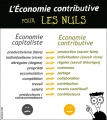 Economie-contributive-pour-les-nuls.jpg 603 × 679; 145 KB
-
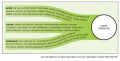 Fleuvebienscommuns.jpg 586 × 300; 41 KB
-
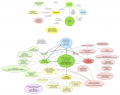 Global-mind-tech.png 2,644 × 2,098; 426 KB
-
 Gustavo sugahara.jpg 336 × 477; 26 KB
-
 IMG 20210411 131916.jpg 2,448 × 3,264; 993 KB
-
 Logocincompania.png 358 × 345; 34 KB
-
 Michel Bauwens02.jpg 1,584 × 1,050; 250 KB
-
 Pandora dialog.png 752 × 507; 175 KB
-
 Pandora net.png 531 × 409; 58 KB
-
 Tableau-loi-et-communs.png 614 × 679; 37 KB
-
Wikimedia México logo.png 400 × 400; 20 KB


